WHERE HE STARTED
THE ABILITY WAS THERE. THE BODY WASN'T WORKING TOGETHER.
When Sean first came in, there was ability there. But his body wasn't working together yet.
His hands were doing too much. His lower half wasn't giving him much help. The barrel was working in and out of the zone instead of staying through it, and he wasn't creating speed as efficiently as he could.
His first Blast Motion session set the baseline:
- 40.5 MPH bat speed
- 58% on-plane efficiency
- 10.1 g rotational acceleration
- 1.7 kW power
- 0.195-second time to contact
THE MAIN FOCUS
NOT BAT SPEED. A BETTER SWING.
The goal wasn't to chase bat speed. The goal was to build a better swing.
THE WORK
LOAD, HINGE, HIPS FIRST.
They worked on his load and hinge. They worked on getting his lower half involved and letting the hips lead instead of immediately throwing his hands at the baseball. They cleaned up the barrel path and worked on keeping his body connected through the swing.
The progress wasn't perfectly linear. Some sessions, the numbers jumped. Other sessions, they had to go backward and clean things up again.
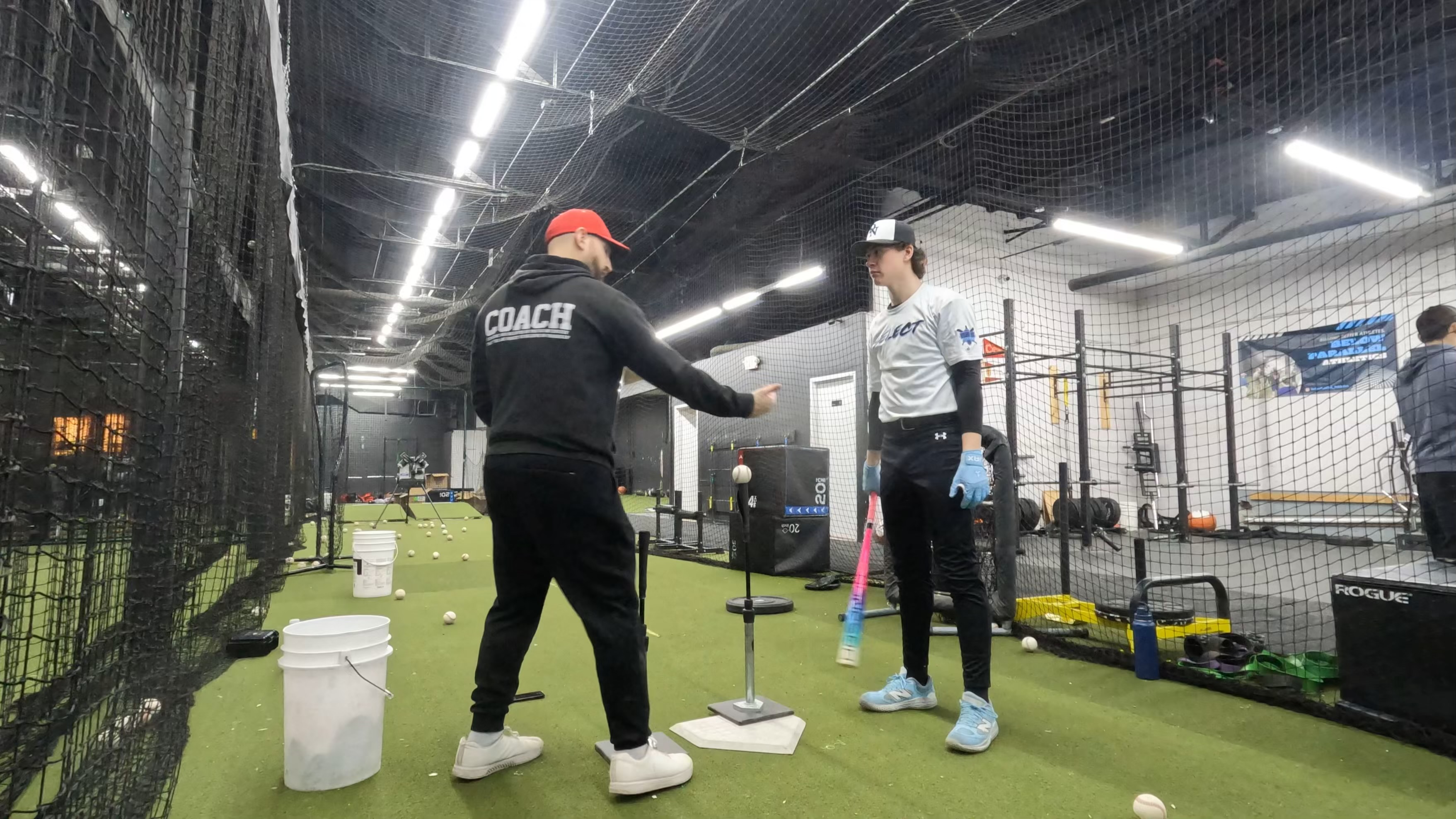
At one point, Sean touched 52 MPH, but the swing wasn't as connected as Coach Steve wanted it to be. So they didn't chase 53. They went back to the movement. A bigger number doesn't mean much if the swing producing it isn't something you want showing up in a game.
Load and hinge
They worked on his load and hinge.
Lower half
They worked on getting his lower half involved and letting the hips lead instead of immediately throwing his hands at the baseball.
Barrel path
They cleaned up the barrel path and worked on keeping his body connected through the swing.
WHAT STARTED TO CLICK
THE SPEED SHOWED UP ON ITS OWN.
As Sean became more consistent with the movement, the speed started showing up naturally: 54 MPH. Then 55. Then 57.
Once the foundation was stable enough, Coach Steve added over-speed work so he could learn to move faster without losing the swing they had built. He wasn't just swinging harder. The whole swing was becoming more efficient.
SEE THE CHANGE
EARLY SESSIONS VS. NOW.
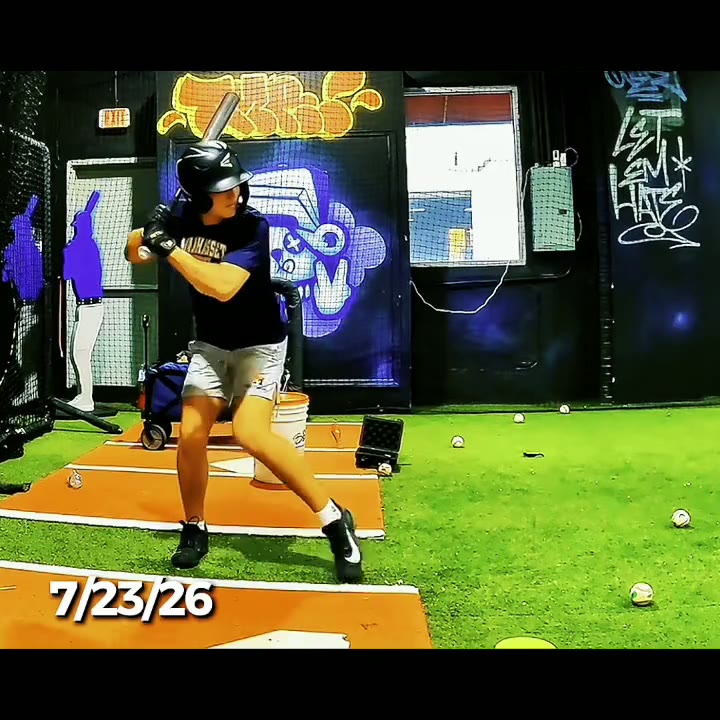
BEFORE
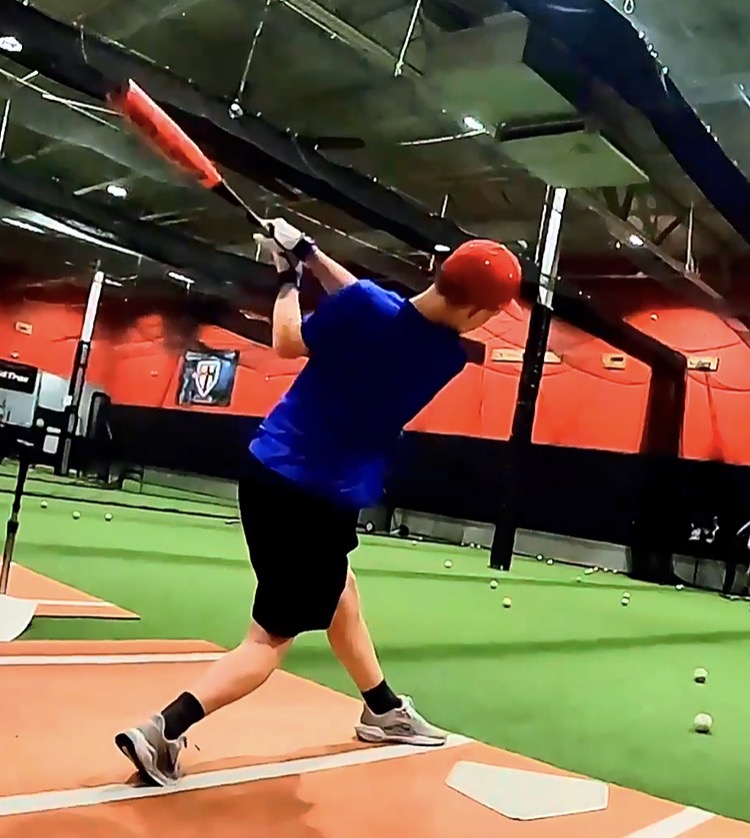
AFTER
| Metric | Start | After 92 Days |
|---|---|---|
| Bat speed | 40.5 MPH | 59.8 MPH |
| On-plane efficiency | 58% | 70% |
| Rotational acceleration | 10.1 g | 12.7 g |
| Power | 1.7 kW | 2.3 kW |
| Time to contact | 0.195 s | 0.183 s |
WHERE HE IS NOW
59.8 MPH. A MORE CONNECTED SWING.
Sean finished the 10 sessions at 59.8 MPH. That's up 19.3 MPH from 40.5, a gain of nearly 48%.
He became faster, quicker to the baseball, more connected, and more efficient through the zone.
COACH STEVE'S TAKEAWAY
NO MAGIC DRILL. THE RIGHT ORDER.
Sean didn't get there because of one magic drill or one mechanical cue. Coach Steve found what was holding the swing back, built the movement in the right order, and added speed on top of a better foundation.
The swing he walked out with was not the swing he walked in with. That's what the numbers showed. More importantly, that's what the swing showed.
This is the physical side of the 50/50 Hitting System. For a related result, read Gavin's story.