BLOG
Mechanics.
Approach.
IQ.
Clear, practical guidance to help you understand what your hitter needs—and what to work on next.
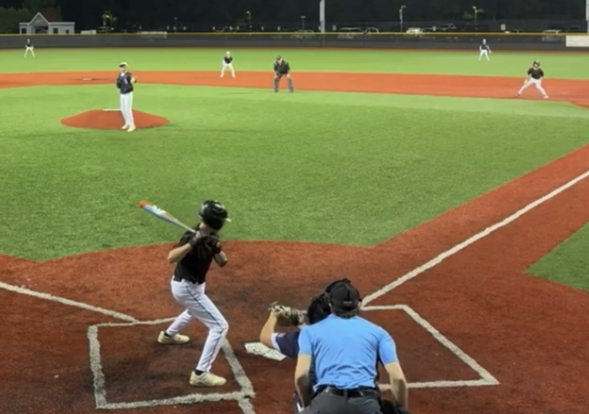
What Happens When Pitching Speeds Up at 9U/10U?
At 9U and 10U, pitchers start throwing harder and hitters lose time to see, decide and swing. Here's what faster pitching exposes and how young hitters adjust.
Read post →
What Baseball Actually Teaches Parents About Failure
The best hitters in the world fail seven times out of ten. How your athlete learns to handle that matters more than their swing path.
Read post →
Why the Tee Is the Most Misused Tool in Baseball
The tee is an underrated diagnostic tool, but most hitters misuse it. Here is how to make every tee rep build real transfer instead of reinforcing bad habits.
Read post →
Baseball Swing Mechanics: What the Hands, Hips, Knees and Weight Actually Do
Every part of the swing has a job. Here's how I break down the hands, hips, knees, weight transfer and bat angle, and what goes wrong when one of them doesn't do its part.
Read post →
Why a Good Swing Isn’t Enough to Hit in Games
A hitter can look good in the cage and still struggle in games. Learn how pitch selection, count awareness, and a clear plan fit alongside swing development.
Read post →
The Count Is the Situation
A hitter can know there is a runner on third and still have no plan for the at-bat. Situational hitting requires understanding the what, the why, and the how before the first pitch is thrown.
Read post →
The Different Ways to Load in a Baseball Swing—and What Actually Matters
A high leg kick, small leg lift, or simple pick-up-and-put-down can all work. The right load is the one that keeps a hitter balanced, on time, and able to adjust when the pitch changes.
Read post →
Two-Strike Hitting: Advanced Approach Strategy
The two-strike count exposes everything—your mechanics, your mental game, and your preparation. Here's how to stop surviving and start thriving.
Read post →
The Count Changes the Swing: Why 3-0 and 0-2 Are Different Worlds
A 3-0 count and an 0-2 count ask different things from a hitter. Learn how to use count leverage, hunt a pitch you can drive, and stay competitive with two strikes.
Read post →
The 7 Critical Swing Checkpoints
A repeatable swing isn't built on feel alone. These are the seven checkpoints I look at on every swing — in lessons, on video, and in games.
Read post →
How to Choose the Right Hitting Coach on Long Island: 10 Questions Parents Should Ask
The best coach is not automatically the one with the biggest name, nicest facility, or most impressive batting-practice videos. Ask these 10 questions to find the right development fit for your hitter.
Read post →
TWO STRIKES SHOULD CHANGE YOUR APPROACH — NOT DESTROY YOUR SWING
Read post →
Defining a Quality At-Bat (QAB)
Batting average lies. QAB% is the metric I track because it tells you whether the hitter is competing — not whether they got lucky.
Read post →
Baseball IQ: The Real Separator
Tools get you noticed. Baseball IQ keeps you on the field. Here's why every elite hitter I've played with thinks the same way at the plate.
Read post →
Why Your Hitter Looks Great in Batting Practice but Struggles in Games
Your hitter does not need to become better at batting practice. The goal is to build a swing, approach, and decision-making process that survive when the game speeds up.
Read post →
The Home Run Mindset
The 'home run mindset' feels productive, but it quietly kills consistency. Here's why chasing bombs usually leads to the wrong swing at the wrong pitch.
Read post →
Game IQ and Situational Awareness in Baseball: The Secret Weapon of Elite Players
Raw talent gets you noticed. Game IQ and situational awareness keep you on the field — and ahead of the competition.
Read post →Stealing Second Base: Win the 90 Feet Before You Run
Don’t steal because the count says “go.” Steal because you have an advantage. Smart runners study the pitcher, find a pattern, and attack the right opportunity.
Read post →Situational Hitting — Know Your Job Before the Pitch
Score, outs, runners, count, defense: each one changes your job at the plate. Coach Steve breaks down the decisions hitters should make before the pitch.
Read post →THE NEXT STEP
WANT THIS DIAGNOSED ON YOUR HITTER?
Your hitter probably doesn’t need more random swings. They need to know what they’re actually trying to fix.
Start with an Initial Hitting Assessment — video analysis, swing and mechanics evaluation, approach and hitting-IQ review, and a clear development plan.