WHERE HE STARTED
HE HAD THE STRENGTH. HE WASN’T USING IT.
Nic Luk, Gavin’s summer head coach, recommended that Adam reach out to Coach Steve. Nic had seen his work firsthand and thought he could help.
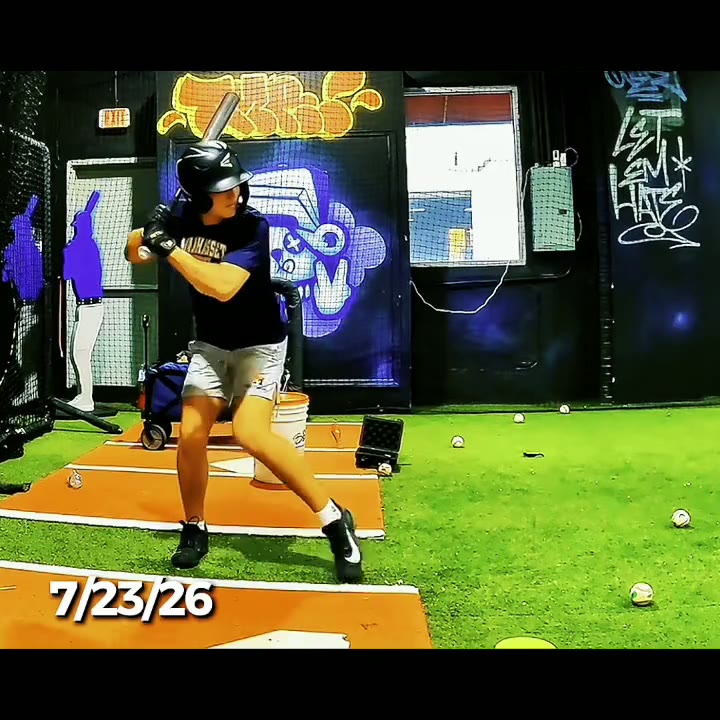
Gavin could get the bat to the ball, but he caught too many pitches out in front and worked around them. Balls he had the strength to drive were turning into singles. His upper body was doing most of the work, while his lower half contributed very little.
His setup changed, too. Sometimes he stood too close to the plate; other times, too far away. He didn’t understand how that positioning affected what he could reach and where he could make strong contact. His 33-inch drop-3 bat was too long and heavy for him to control efficiently, and he didn’t have a clear approach for different counts.
Coach Steve explained it to Adam this way: Gavin had a powerful body, but he wasn’t getting enough help from the strongest part of it—his legs. There was something to build on. The job was to get his body working together and give him a better understanding of what he was trying to do.
THE WORK
THE LOWER HALF. THE RIGHT BAT. A PLAN.
Put his legs into the swing
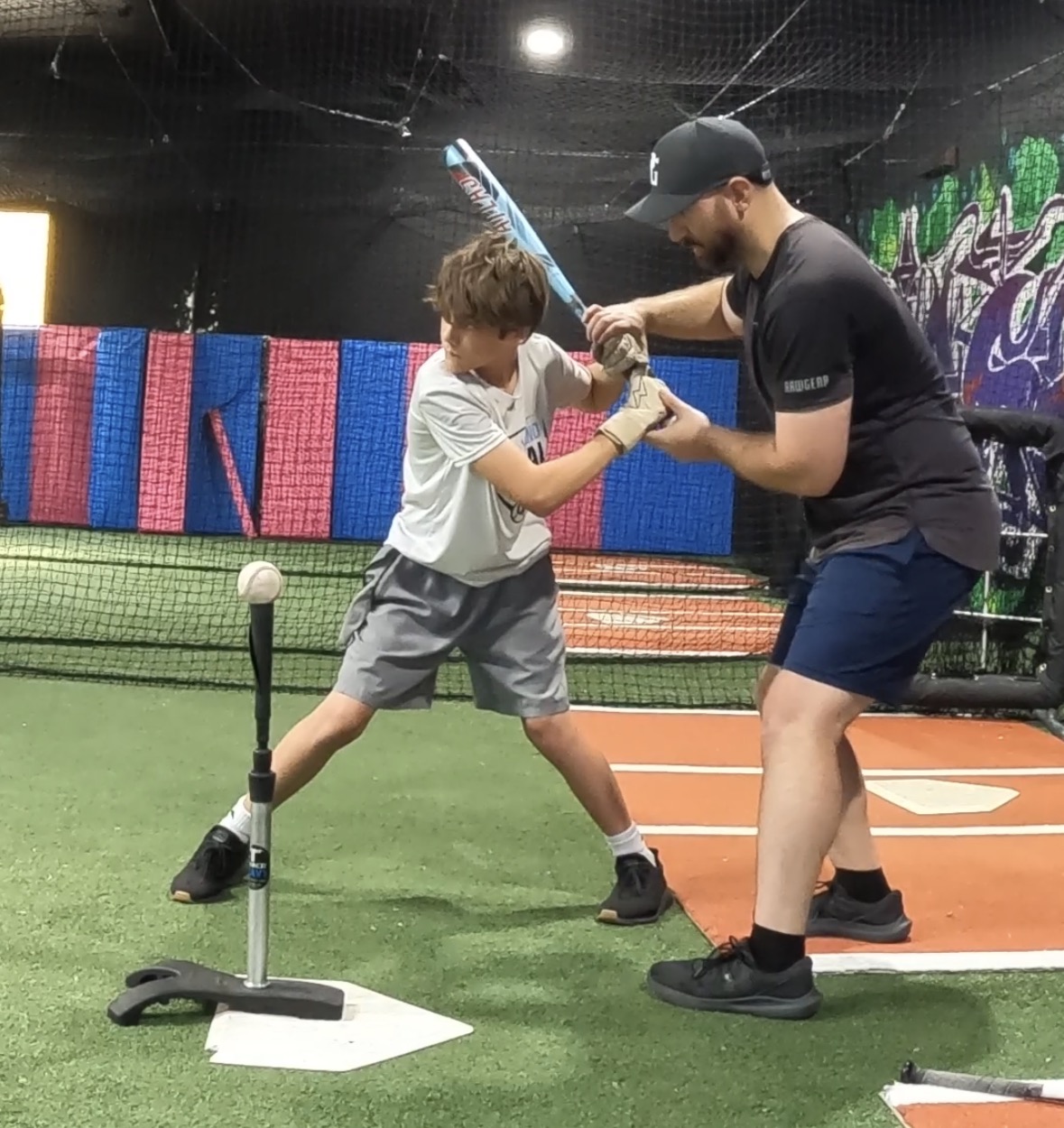
The work started with his setup, load, and move into rotation. Gavin needed to feel his lower half contribute instead of asking his arms and shoulders to do everything.
The goal was a movement he could repeat: get loaded, move forward under control, and let the lower half lead while the upper half stayed connected. His strength could do more for him once the pieces worked together.
Find a bat that worked for him
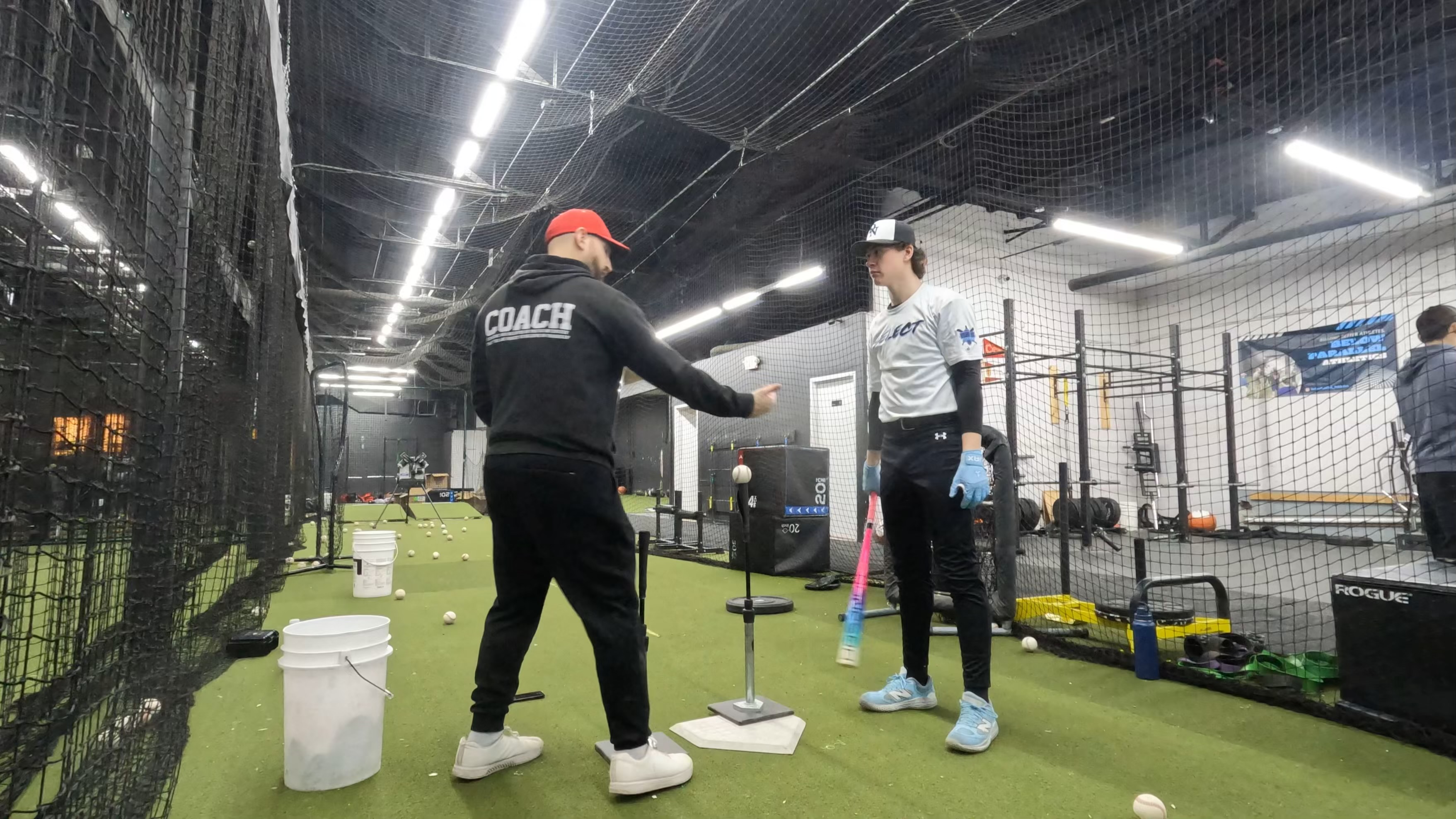
Coach Steve tested different lengths and weight distributions: 32-inch bats, 31-inch bats, shorter top-heavy bats, and longer balanced bats.
A balanced 31-inch gave Gavin the best combination of barrel control and efficient movement. He could use the field better and get his body involved without working so hard just to bring the barrel around.
Bat fit stayed part of the evaluation. Coach Steve kept checking it against his actual swings and game performance as he developed.
Teach him what to do with it
They worked on counts, situations, and pitch selection. Gavin needed to understand which pitches he could drive, when he could be selective, and when he needed to protect.
Every round needed a purpose. A better swing gave him more ability to do damage. A better plan helped him recognize when to use it.
SEE THE CHANGES
THE CONTACT STARTED DOING MORE.
BEFORE
BEFORE — upper body doing most of the work, with limited lower-half involvement.
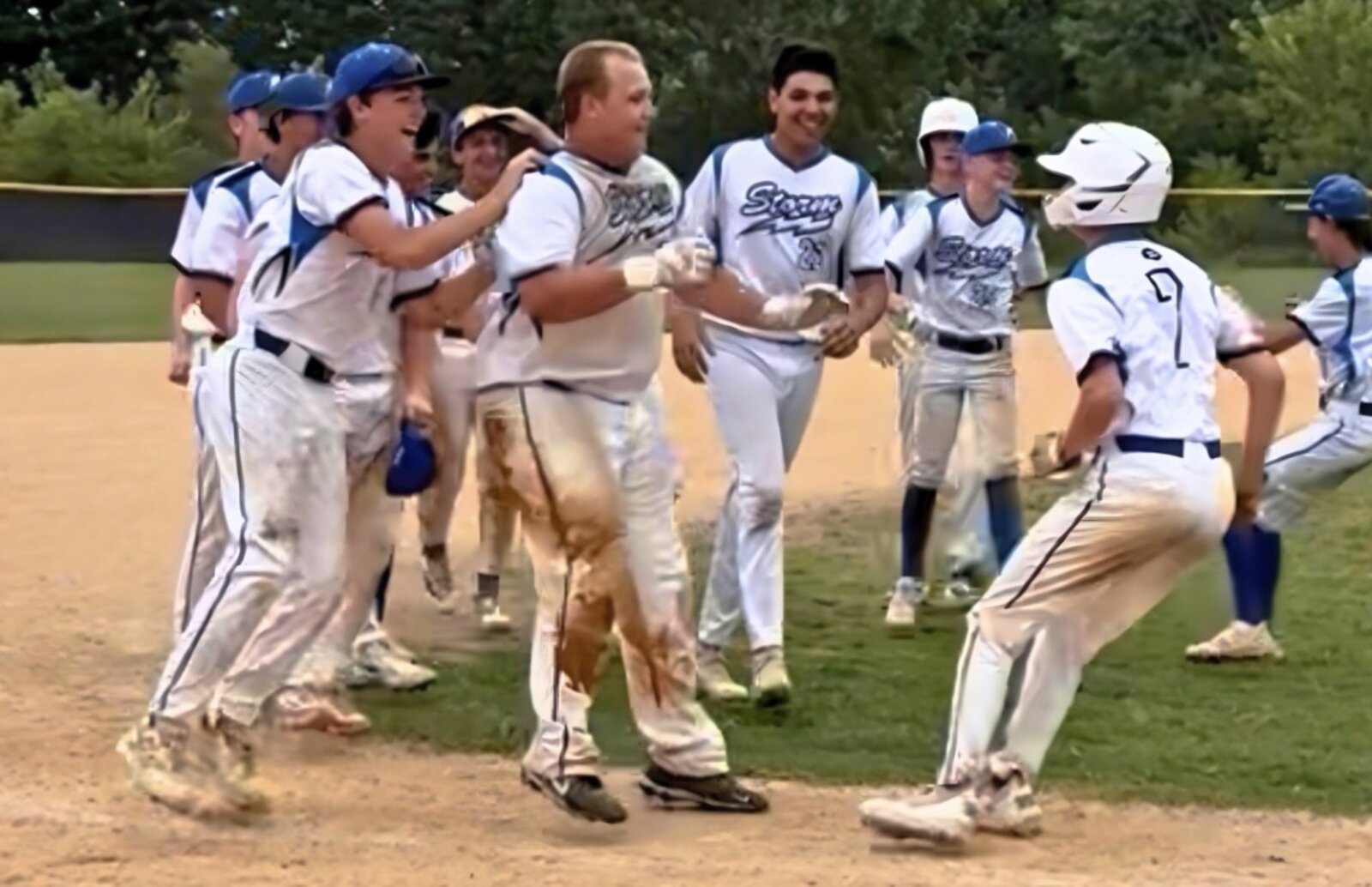
AFTER
AFTER — more of his body contributing and stronger contact in a game.
The results included a .424 batting average, eight extra-base hits, and his first two home runs. Gavin was beginning to turn the contact ability he already had into a bigger threat at the plate.
Assessment → December
At the assessment, too much of the swing depended on his upper body. The work centered on getting his lower half involved, improving connection, and finding a bat that helped him move efficiently.
By December, the comparison showed more lower-half contribution and a better move into rotation. These were progress checkpoints. Making those changes repeatable remained part of the work.
Learning to adjust when something wasn’t working
In a later session, Gavin kept rolling over curveballs. They worked on creating a stronger inward coil before moving forward, then letting his lower half lead and his upper half follow.
During that session, the contact changed from rollovers to hard balls through center and left-center. That was another meaningful step: identifying a problem, making a specific adjustment, and seeing the difference.
Adam described what the development meant for his son:
“Steve Goldstein is a godsend. He committed that he'd transition Gavin from a solid singles contact hitter to a dominant gap-to-gap doubles guy — and hasn't disappointed. Gavin is truly thriving and is now realistically talking about playing beyond high school. This guy is an obsessive mechanics freak. It's great.”
WHERE HE IS NOW
HE STAYED WITH IT. HIS OPPORTUNITIES GREW.
There were stretches when Gavin wanted to stop. Adam helped him stay with the process, and they kept working through the adjustments. Some days the progress was obvious. Other days required going back to his setup, load, and connection.
After being cut the previous year, Gavin made his high school team. Then the conversation at home grew. Playing beyond high school became a goal the family was actively pursuing, with college outreach and conversations underway.
His first home runs mattered. Making the team mattered. So did staying with the work through the stretches when he couldn’t yet see where it would lead.
Gavin gave himself a chance to pursue more. That chance was earned over time.