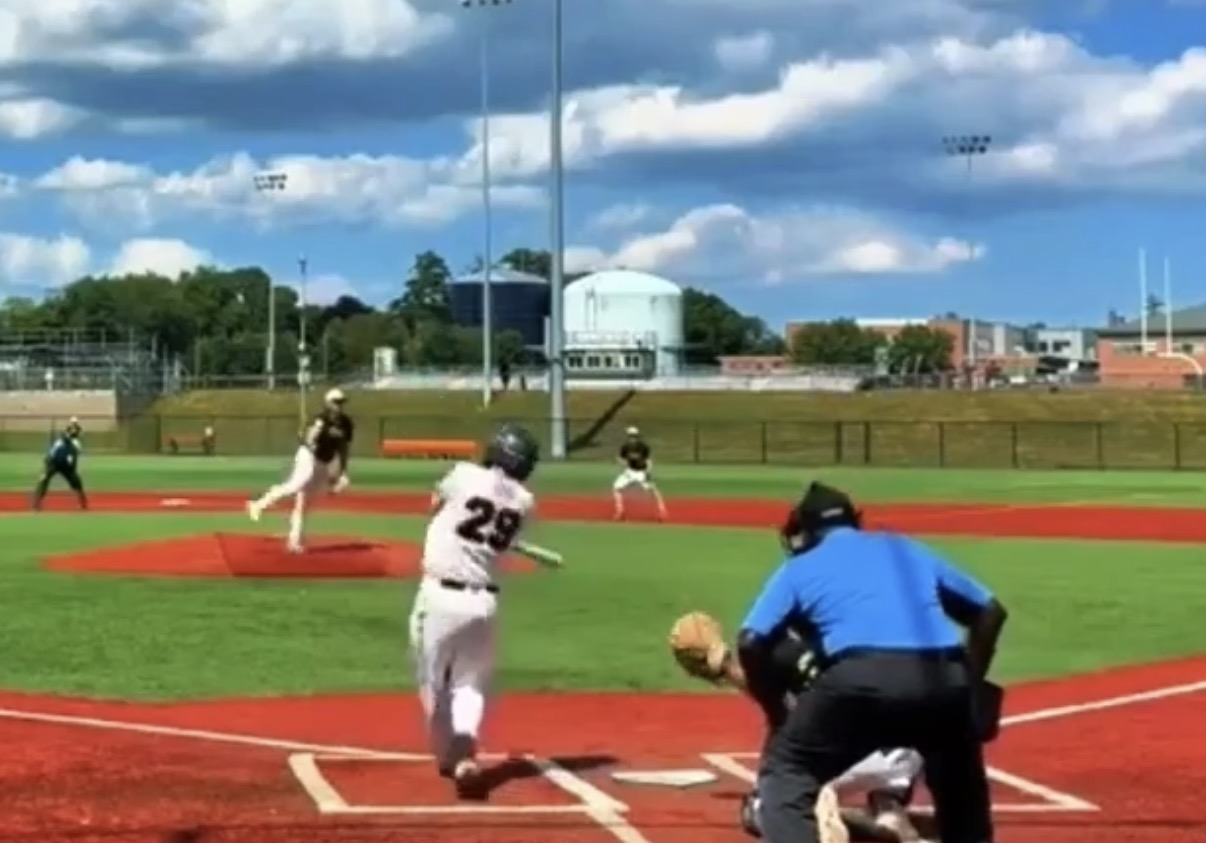
In my work as a private hitting coach in Westbury, NY, I focus on more than how a swing looks in the cage. We train preparation, pitch decisions, and the adjustments a hitter needs when the game speeds up. Emmet’s story shows what that process looked like for one player—from early struggles to purposeful at-bats.
When Emmet Reilly joined my team in fall 2025, I had never coached him before. He had athleticism and bat speed, yet he struggled to turn those tools into consistent game contact. His timing, lower-body sequencing, barrel path, and plate approach needed attention, and the frustration of hitting near the bottom of the order was wearing on him.
Those early struggles did not define him—they gave us a starting point. Near the end of that fall season, on October 15, Emmet walked up to me and said he wanted to train. Asking for help when you are struggling takes guts, and once we got to work, he stayed committed to the process.
Building Swing and Plan
We did not chase a quick fix or a single magic drill. Instead, we built a repeatable foundation and tested it against game-like speed and decisions across three core areas:
- Getting ready on time meant building a repeatable load and stride so Emmet arrived in a balanced position to hit without rushing.
- Connecting the swing meant organizing his lower-body sequence, hand discipline, and barrel path rather than relying on raw athleticism alone.
- Training the at-bat meant working on pitch selection, velocity and spin recognition, two-strike adjustments, and situational baseball IQ so he had a clear plan for carrying practice into games.
Some of the best progress happened between lessons when Emmet began reviewing his own swing videos. Rather than waiting for me to point out every flaw, he wrote down what he saw in his own words: “Right side toss but my timing was off,” “Angled toss drill. Goal was to drive the ball to center or right,” and “Shoulders opened right when I exploded into my swing.”
A hitter who can watch film and name what went wrong is learning to coach himself between pitches. As Emmet put it: “Training with Coach Steve changed how I think at the plate. I’m not just swinging—I’m hunting pitches, working counts, and understanding what each at-bat needs. The Baseball IQ side of it is different from anything I’ve had before.”
How Results Showed Up
In his spring club season, Emmet hit .389 with a 1.153 OPS, six walks, six strikeouts, and a .429 average with runners in scoring position. He also went 14-for-15 on stolen-base attempts, turning every trip to first base into immediate pressure on the defense. That same spring in middle school ball, he hit .353 with a .389 on-base percentage and a .400 mark with runners in scoring position.
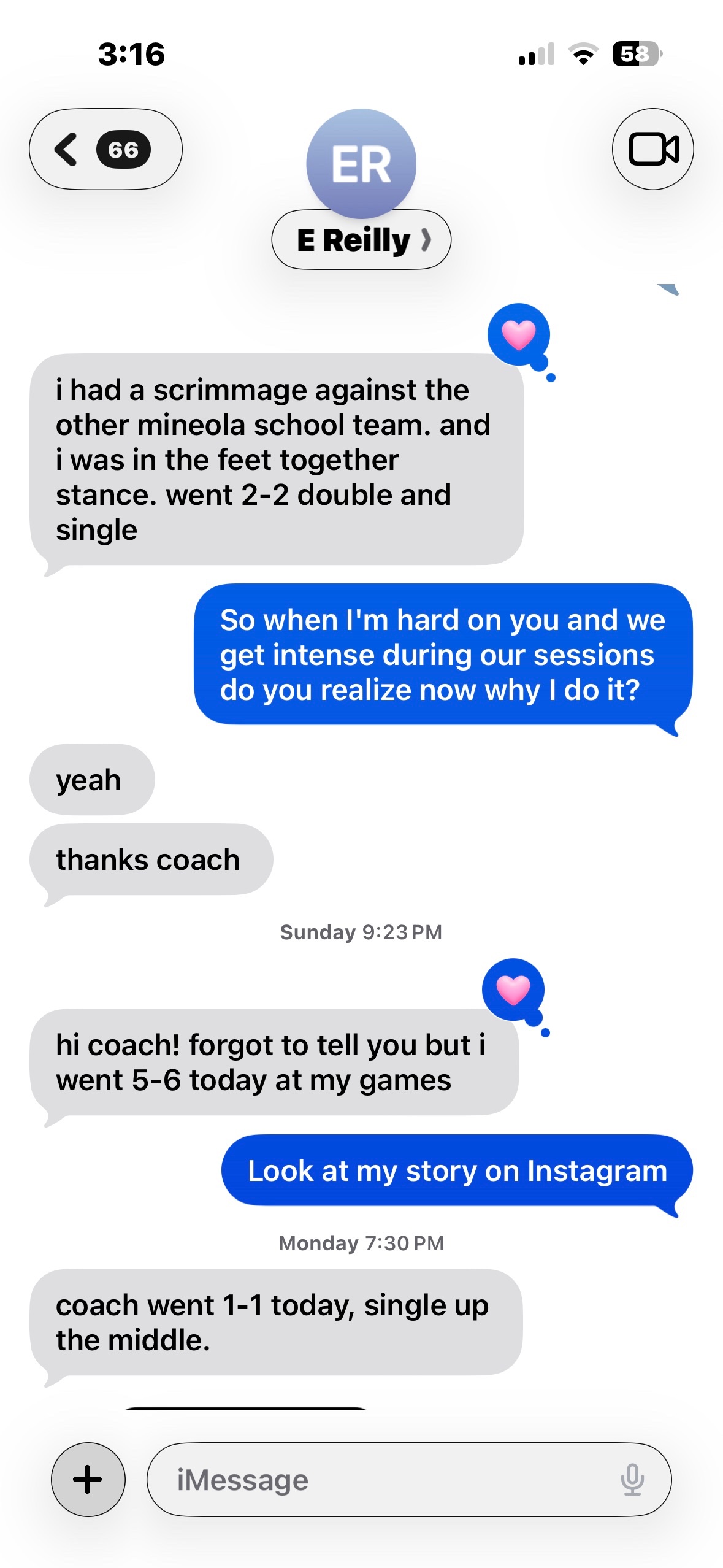
By spring and summer 2026, Emmet was competing at the 13U and 14U levels and hitting between first and third in the lineup. In his third summer game, he went 5-for-6 with two doubles and a triple. Those numbers came across small sample sizes that naturally settle over a longer schedule, so one big afternoon was never the finish line.
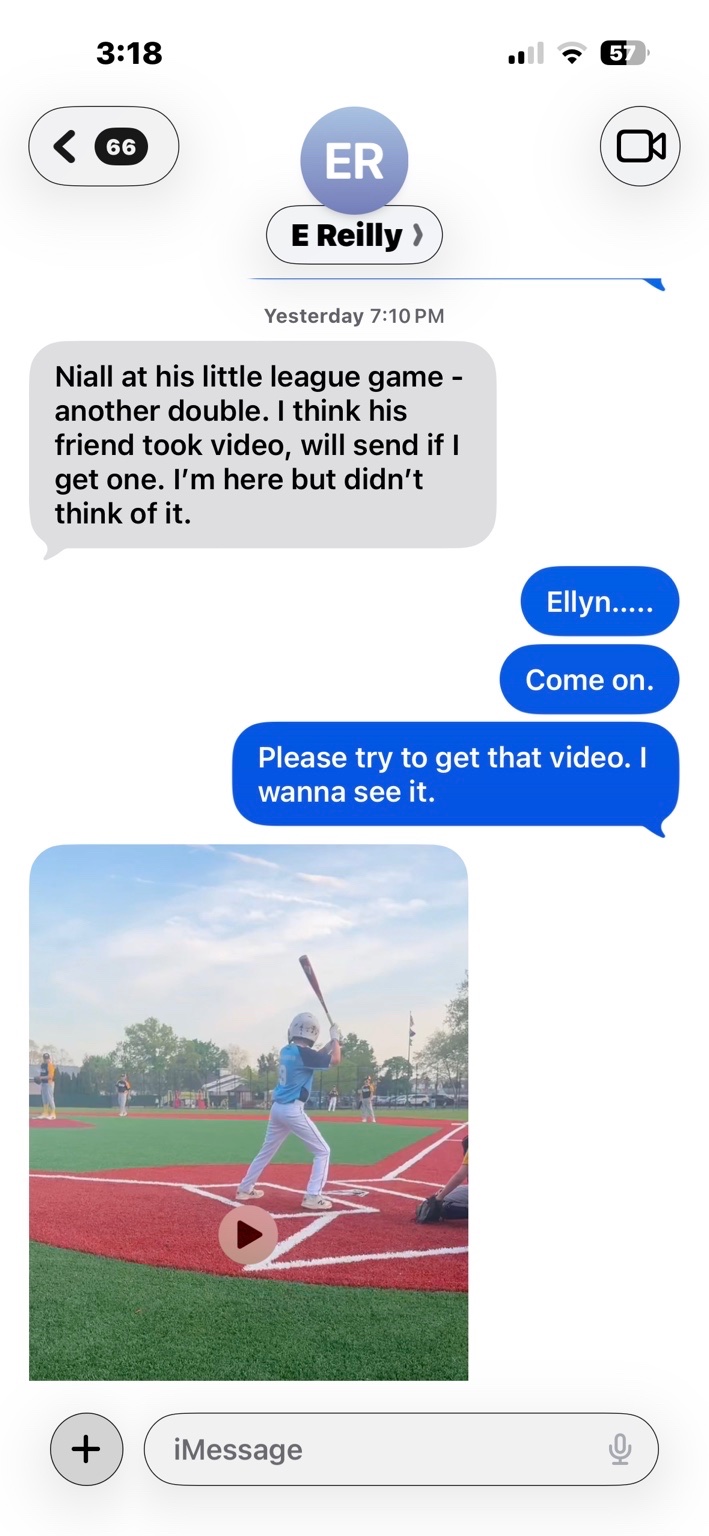
What stood out even more was the shift his mother, Ellyn, noticed three months into training: “Emmet started training in October with a focus on baseball IQ and approach at the plate. Three months later, something bigger than stats stood out—I love that he’s thinking deeper about the game. Really looking forward to seeing him play this season. Thank you.”
Hitting Instruction in Westbury
Early struggles do not define a young ballplayer. When training addresses both the mechanics of the swing and the decisions behind it—and the player takes ownership of the work—adjustments have a real chance to hold up at game speed.
I work with youth and high-school hitters ages 8 to 18 in Westbury, serving families across Nassau County and Long Island. Training starts with understanding the individual player—how he prepares, how he moves, and how he approaches every at-bat.
If your player is working hard in practice without seeing it carry over on game day, explore my private hitting instruction in Westbury or request a hitting assessment to get started.