In this article5 sections · tap to jump
If you send me the one swing that looked bad, I can tell you what that swing looked like. Send me the whole at-bat and I might be able to tell you why the hitter took it.
Which pitch would change the next lesson?
Imagine you’re on the first-base side with your phone. Your child swings through strike three and you have a clear view of the barrel going underneath it. Replay that six times and you’ll get six good looks at the miss. You still won’t know whether the hitter had spent the previous two pitches trying to catch up to fastballs and then chased something slower as if it were the same speed. That’s a lesson about recognition and adjustment. Moving the hands higher might make a practice swing look closer to the last pitch while doing very little for the original problem.
Now imagine they say they saw it the whole way, were looking for that location and felt jammed even though the ball was over the plate. I’d want to compare where they stood and when the front foot landed on a pitch they handled well. That’s a different video question and a different kind of help. Getting the first pitch on camera gives me the chance to choose between those explanations.
A hitter who reaches for a breaking ball at 0–2 might have passed on a fastball in the middle at 1–1. Cut out the earlier pitch and the lesson changes. That’s why I ask families to record the takes, the fouls, the time between pitches and, yes, the at-bats that went well.
What a single swing can hide
In one game breakdown, the clip started at 2–1 with the pitcher already moving. I could see a runner at third. The shortstop was in and the second baseman was back. I could also see that the hitter was standing well off the plate. He handled a pitch inside and got the runner home. That at-bat was worth sending even though the swing gave us things to work on.
Here’s what I could tell the hitter. He put a useful ball in play in a scoring situation. Here’s what I wanted to see next. Did he set up that far away on earlier pitches too? Did he pass on something middle-away because it looked too far away to hit? The video started too late to answer. If I told him why he took those pitches, I’d be making it up.
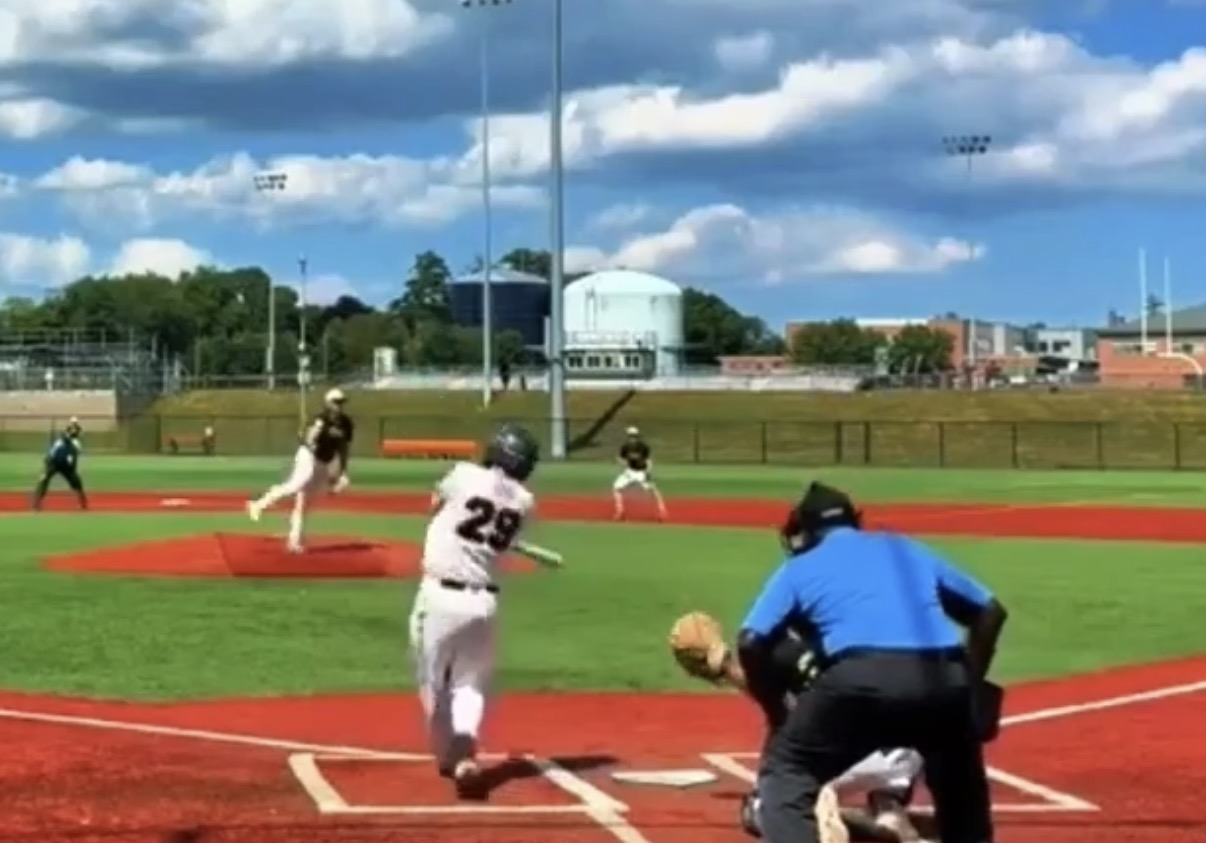
A parent can solve that problem with the record button. Start as the hitter steps in. Keep the plate and the hitter’s feet in frame. If the phone has to choose between following a fly ball and staying on the hitter, stay on the hitter. You can always tell me where the ball landed. You can’t recreate where the front foot was when the pitcher let go.
Pick the angle for the question
From behind home plate, through the protective fence, I can usually get a better look at pitch location and what the hitter offered at. From the open side, where I can see the hitter’s chest, I can look at when the stride starts, what turns first and where the hitter is at contact. Use the angle you can get from a permitted spectator spot. One steady view of a complete at-bat is plenty.
Two clips I’d choose over a highlight reel
If you can send two at-bats, send one that felt good to your player and one that gave them trouble. Suppose both ended with a ground ball to short. In the first, the hitter turned on an inside strike and hit it hard. In the second, they reached for a ball off the plate and rolled it over. The same out in the book gives us two very different pieces of information. A coach who sees both has a better chance of protecting the swing that worked.
Leave the sound on if the surroundings allow. A take followed by a strike call changes the next pitch, even when the camera angle makes the pitch look like a ball. Keep the clip at normal speed. I can slow down a swing afterward. I can’t judge the rhythm of the hitter’s load from a slow-motion clip with the start of the delivery missing.
What I’d send with the video
Here’s a sample note a parent could type in ten seconds. Third inning, runner on second, one out. This is the whole at-bat. She said she was looking for a fastball away. She thought the second pitch was one. That last sentence belongs to the hitter. Give them a chance to say it before anybody tells them what the replay shows.
I’ll usually look at the clip once for the game and once for the swing. What opportunity did the pitcher give the player? Did they see it? When they did choose to go, were they physically able to do what they intended? Whether the next lesson starts with the eyes, the count plan or the stride depends on those answers.
If you’re filming this weekend, pick the question before you pick your spot. Send the whole at-bat, the situation and the hitter’s own read. If you’re a Long Island family trying to work out why a pattern keeps returning, that’s the kind of clip worth bringing to an initial hitting assessment. We’ll have an actual game problem to put in front of the hitter.