In this article8 sections · tap to jump
A good swing matters, but it is only part of becoming a good hitter. Hitters also need to recognize pitches, understand the count, know the situation, and choose pitches they can drive. That is Baseball IQ.
Building smarter, game-ready hitters means teaching players when to attack, when to take, and how to adjust as the at-bat unfolds. The order I teach it in:
Situation → count → pitcher evidence → your strengths and setup → live pitch decision.
Mechanics give a hitter the ability to make a swing. Baseball IQ tells him whether that swing was the right one.
1. Pitch recognition: what it actually means
Pitch recognition is more than telling a fastball from a curveball. It is four separate skills:
- Pitch type: fastball, breaking ball, off-speed.
- Trajectory: in or out, up or down, likely strike or ball.
- Timing: on time for the velocity.
- Decision: swing, take, protect, or attack.
Pitch type shows up early. Location takes longer. So a hitter should not guess location at release. He uses the early information to get his clock ready, then uses the flight of the ball to decide whether it enters his zone.
Hitting IQ Read early. Decide late. Commit only when the ball earns it.
The research backs this up. In a study of 105 professional hitters, the ones who were better at identifying pitch type a fraction of a second after release tended to strike out less. And when researchers hid the ball partway through its flight from 23 professional hitters in Japan, timing held up, swing decisions slipped a little, and adjusting the swing path to the pitch’s location fell off the most.
Timing starts early. The decision and the barrel keep using the flight of the ball.
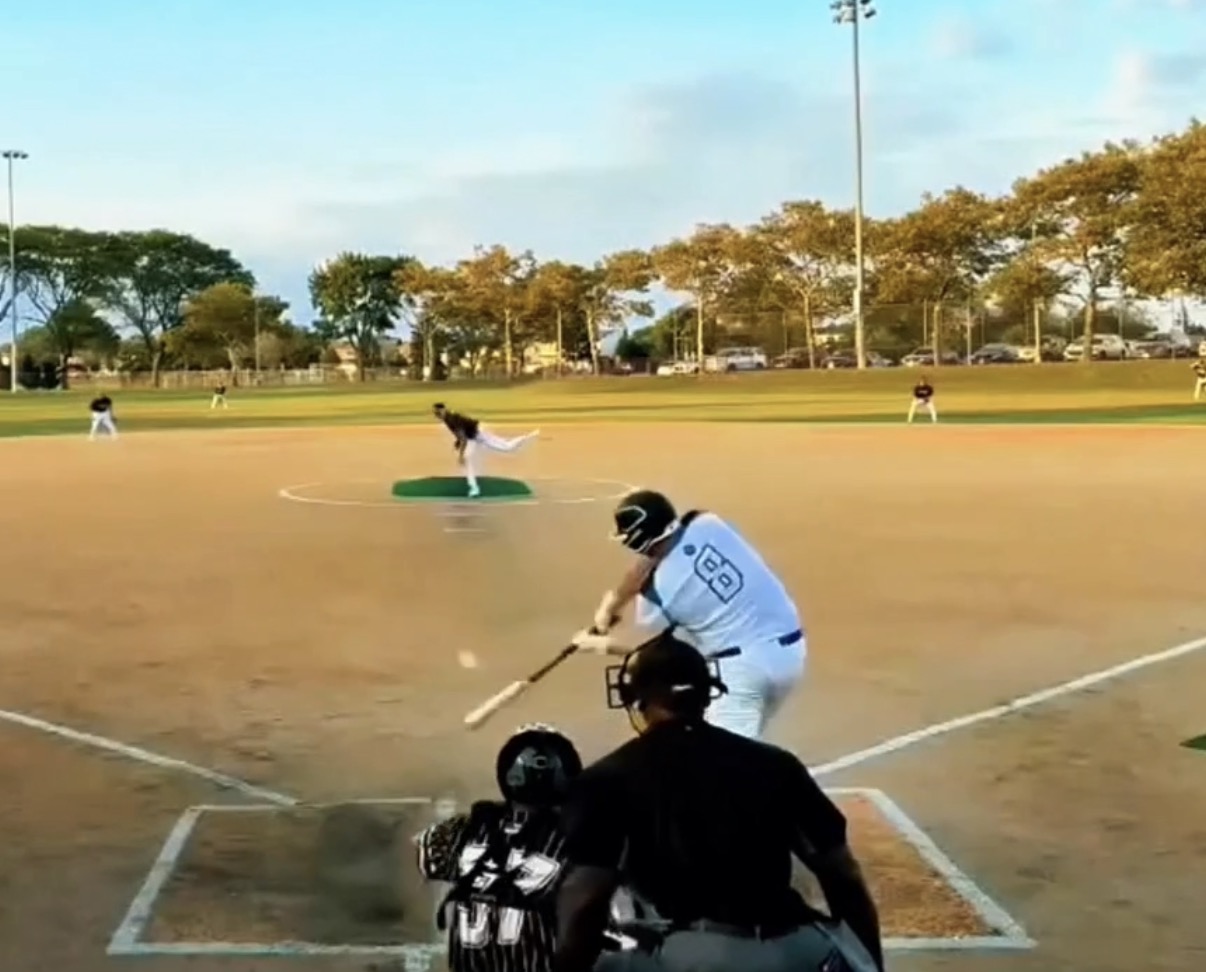
What good hitters ask before the pitch
- What does this pitcher throw?
- What does he throw for a strike?
- What is his put-away pitch?
- Is he around the zone or just throwing hard?
- What has he shown in this count?
- What pitch and location am I willing to hit hard?
- What pitch am I refusing to help him with?
Then, during the pitch:
| Phase | Hitter’s job |
|---|---|
| Before delivery | Build a probability: “What is most likely?” |
| Release | Pick up rhythm, release window, velocity and shape clues |
| Early flight | Recognize fast vs. slow, straight vs. moving |
| Mid-flight | Determine strike or ball, damage or protection |
| Contact | Match the barrel to the actual pitch, not the guessed pitch |
The mistake is teaching “see the seams” as if that alone solves recognition. Spin can help. The real skill is learning the pitcher’s rhythm, release, velocity, shape and patterns, then making a disciplined yes-or-no decision.
Know the situation, know the count, know your strengths, know what you are hunting and what you are laying off.
2. The count changes your responsibility
The count does not tell a hitter what pitch is coming. It changes the value of his decisions. The count changes the swing, and it changes the plan.
A great hitter does not become reckless in a hitter’s count or helpless in a pitcher’s count.
| Count | Hitter’s responsibility | Best general plan |
|---|---|---|
| 0–0 | Be selectively aggressive | Attack a known damage pitch. Do not auto-take or auto-swing. |
| 1–0, 2–1 | Hitter has leverage | Expect the pitcher to need a strike, but hunt a window, not the entire zone. |
| 2–0, 3–1 | Maximum controlled aggression | Shrink to your best zone and do damage. Do not chase a pitcher’s pitch. |
| 3–0 | Protect the walk | Default take unless there is a specific green light and an exact target. |
| 1–1, 2–2 | True decision counts | Be ready for the pitcher’s best sequence. Keep a clear take plan. |
| 0–1 | Still hunt. Do not panic. | The pitcher is ahead, but it is not a two-strike count. |
| 0–2, 1–2 | Compete and protect | Widen slightly, reduce extra movement, choke up if needed, but still swing with intent. |
| 3–2 | Reach base or put a good pitch in play | Know the runners are moving. Protect close pitches without turning into a chase hitter. |
The most important correction for young hitters:
Hitting IQ A hitter’s count should shrink his zone, not expand it.
On 2–0 or 3–1, the hitter has earned the right to wait for a pitch he can drive. Weak contact on a bad pitch is often worse than missing it and keeping the at-bat alive. That is why a green light cannot mean “swing at anything close.” It means you have permission to be violent on your pitch.
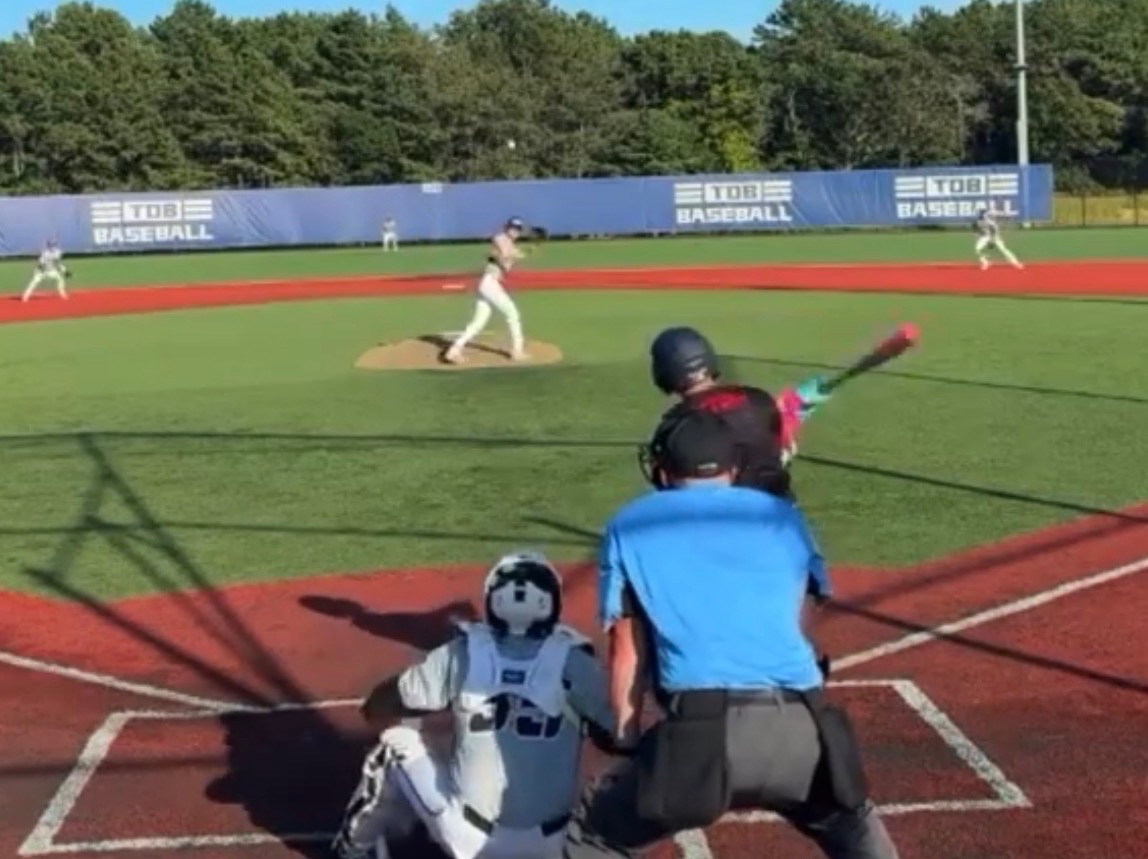
My rule at 0–1 with a runner on second fits here. Slight expansion can make sense because the game situation matters, but the hitter is still hunting. 0–1 is not desperation. For the full two-strike plan, read Two-Strike Hitting.
3. Outs: the most misunderstood part of situational hitting
Outs are the offense’s most limited resource. The first question is not “How do I move the runner?” It is:
Are we trying to score as many runs as we can, or do we need one run right now?
That changes everything.
| Situation | Best offensive priority | What not to teach |
|---|---|---|
| 0 outs, runner on 1st | Preserve the inning. Hunt hard line-drive contact. | “Give yourself up” automatically |
| Runner on 3rd, less than 2 outs | Produce a run with a quality ball in play. Recognize the defense. | Chasing a low breaker just to avoid a strikeout |
| Runner on 2nd, 2 outs | Reach base or do damage. The runner is scoring on quality contact. | “Move him over.” There is no next out to trade. |
| Runner on 1st, less than 2 outs | Avoid predictable double-play contact. Stay through the middle or opposite field when it fits. | Forcing a pull-side ground ball |
| Bases loaded, less than 2 outs | Make the pitcher come into the zone. Create hard contact. | Slapping at pitcher’s pitches just to “get it in play” |
| Late, tied or down one | Raise the odds of one run when the game demands it | Using early-inning, multi-run strategy blindly |
The numbers hold at the high school level. An ABCA analysis of one Georgia high school team’s games from 2013 to 2018 found a runner on first with no outs was worth more expected runs than a runner on second with one out. That does not mean a bunt or productive contact is never right. It means the score, inning, hitter, defense, speed and the need for one run have to justify it.
The rule I teach:
- 0 outs: Build the inning.
- 1 out: Know the run-production opportunity and the defense.
- 2 outs: There are no productive outs. Get on base or do damage.
More on this in Situational Hitting: Know Your Job Before the Pitch.
4. How each pitch should change the at-bat
Every pitch is information. Not every pitch is enough information to make a big adjustment. The hitter should update what he knows after every pitch:
| What happened? | What it tells the hitter | Right adjustment |
|---|---|---|
| Fastball was late | Clock may be too slow | Get the move started earlier. Do not rebuild the swing. |
| Fastball was early | Clock may be too fast | Stay gathered longer. Do not immediately move in the box. |
| Breaking ball was a strike | He can land it, or the umpire will call it | Respect it next pitch. Do not automatically sit breaking ball. |
| Breaking ball was buried | It may be a chase pitch or a miss | Note it, but do not overreact to one noncompetitive pitch. |
| Pitcher missed badly arm-side or glove-side | Command may be poor | Tighten your damage zone and make him prove he can strike you out. |
| Same pitch and location appears twice | The pattern may be real | Raise its odds in your next-pitch plan. |
| Umpire expands a border | The real game zone has changed | Protect closer with two strikes. Do not chase impossible pitches. |
| Defense moves | Directional value changes | Keep pitch selection first. Use field awareness after you get a hittable ball. |
Pitchers build one pitch off another. Earlier locations, what has worked, the count and the pitcher’s own habits all shape what comes next.
One pitch is a clue. Repeated quality pitches are evidence.
A hitter should never make a major mechanical, bat, or plate-position change because of one bad swing.
5. Bat size and weight: why ounces are not enough
Length and weight matter, but how the weight is spread along the bat, its swing weight, often matters more.
A 33/30 balanced bat and a 33/30 end-loaded bat can feel completely different. Weight farther from the hands makes the bat harder to accelerate, stop and adjust. Research on college baseball and softball players found that as a bat’s swing weight goes up, swing speed comes down.
| Bat change | Potential benefit | Potential cost |
|---|---|---|
| Longer | More reach and possible plate coverage | More swing weight. Harder to get on plane and adjust. |
| Heavier | More mass at contact if controlled | Slower acceleration, timing problems, less adjustability |
| End-loaded | Can create more barrel momentum | Can make late or inside velocity much harder |
| Balanced | Easier to start, stop and adjust | May give up some mass at contact for certain hitters |
| Choked up | Quicker swing | Less barrel speed and power potential |
The bat is also not the biggest factor. A Washington State study of 52 youth players found the player’s skill had a bigger effect on how hard the ball came off the bat than which bat he swung.
So the rule is not “use the heaviest bat you can swing.” It is:
Use the heaviest legal bat you can control at game speed without losing timing, decision quality, barrel accuracy or adjustability.
With two strikes, choking up is a real physical adjustment and not only a mental cue. A study of 14 college and pro hitters found it shortened swing time and stride time, at the cost of some bat velocity.
The right bat-fit test
Never decide from tee swings alone. Test:
- Same hitter, same day, similar bat models.
- Change one variable at a time: length, weight, balance point.
- Use mixed pitches and game-speed velocity.
- Grade swing and take decisions, time to contact, barrel quality, exit velocity, line-drive quality and miss pattern.
- Compare normal-count and two-strike performance.
The winner is the bat that produces the best game-ready contact, not the highest bat-speed number.
6. Distance from the plate and depth in the box
These are two separate adjustments:
- Distance from the plate: closer or farther away.
- Depth in the box: up toward the pitcher or back toward the catcher.
MLB now tracks both for every hitter, along with where he makes contact.
| Adjustment | Helps | Costs |
|---|---|---|
| Move closer to the plate | Better outer-third reach. Less reaching. | Less room on inner pitches. More jam and hit-by-pitch risk. |
| Move farther from the plate | More space to clear inner-third velocity | Harder to cover the outer third without reaching |
| Move deeper in the box | Slightly more time to see the pitch and its shape | Changes the contact point. The ball has more time to move. |
| Move up in the box | Changes contact geometry and pitch shape | Less time. Tighter timing window. |

In MLB’s stance data, standing closer to the plate and deeper in the box both go with higher contact rates. That is an association. It is not proof that every hitter should crowd the plate or move back.
The right plate-position standard
Do not use a universal “one bat length from the plate” rule. The right setup is the one where the hitter can:
- Cover an outer-third strike without reaching, rolling over or losing posture.
- Handle an inner-third strike without getting jammed.
- Keep the same posture and barrel decision across both locations.
- Repeat the setup every time.
Then give the player two clear adjustment triggers:
- Repeatedly reaching or rolling over outer-third strikes while on time: move slightly closer.
- Repeatedly jammed on true inner-third strikes while on time: create slightly more space.
Do not move because of one swing. First figure out whether the problem was pitch recognition, timing, bat weight, posture, opening early, or the setup itself.
7. How to train it
This is why I don’t do random cage work. In a 2017 study, 80 hitters were split into groups for six weeks. One group trained in a batting simulator that kept adjusting the challenge to the hitter. Another just took extra batting practice. The study’s conclusion: training carries over to the field best when it does more than recreate ordinary batting practice.
An advanced round should include:
- Situation call. Score, inning, runners, outs, defense, count.
- Plan stated before the pitch. “0–1, runner on second, one out. Slight expansion, still hunting middle-in.”
- Randomized pitches. Mixed speed, spin, location and sequence. No predictable tosses.
- Decisions scored before results. A hard take on a ball can be a win. A weak rollover on a chase is not a win because it found grass.
- One-pitch review. “What did you see? What did you expect? What changed? What is your next plan?”
- Post-at-bat evaluation. Grade recognition, decision, execution and adjustment separately.
That is how cage hitters become game hitters.
What every hitter’s plan should include
- A personal damage zone and layoff zone.
- A plan for 0–0, hitter’s counts, neutral counts, pitcher-ahead counts, two strikes and 3–2.
- A one-sentence read of the game situation before every pitch.
- A known bat specification and a two-strike version of that bat and grip.
- A repeatable box position and two evidence-based adjustment triggers.
- The ability to explain what the pitcher is trying to do, not just what pitch he threw.
Hitting IQ Great hitters do not try to hit everything. They make the pitcher come into a smaller, more dangerous part of the plate, and they adjust when the evidence tells them he will not.