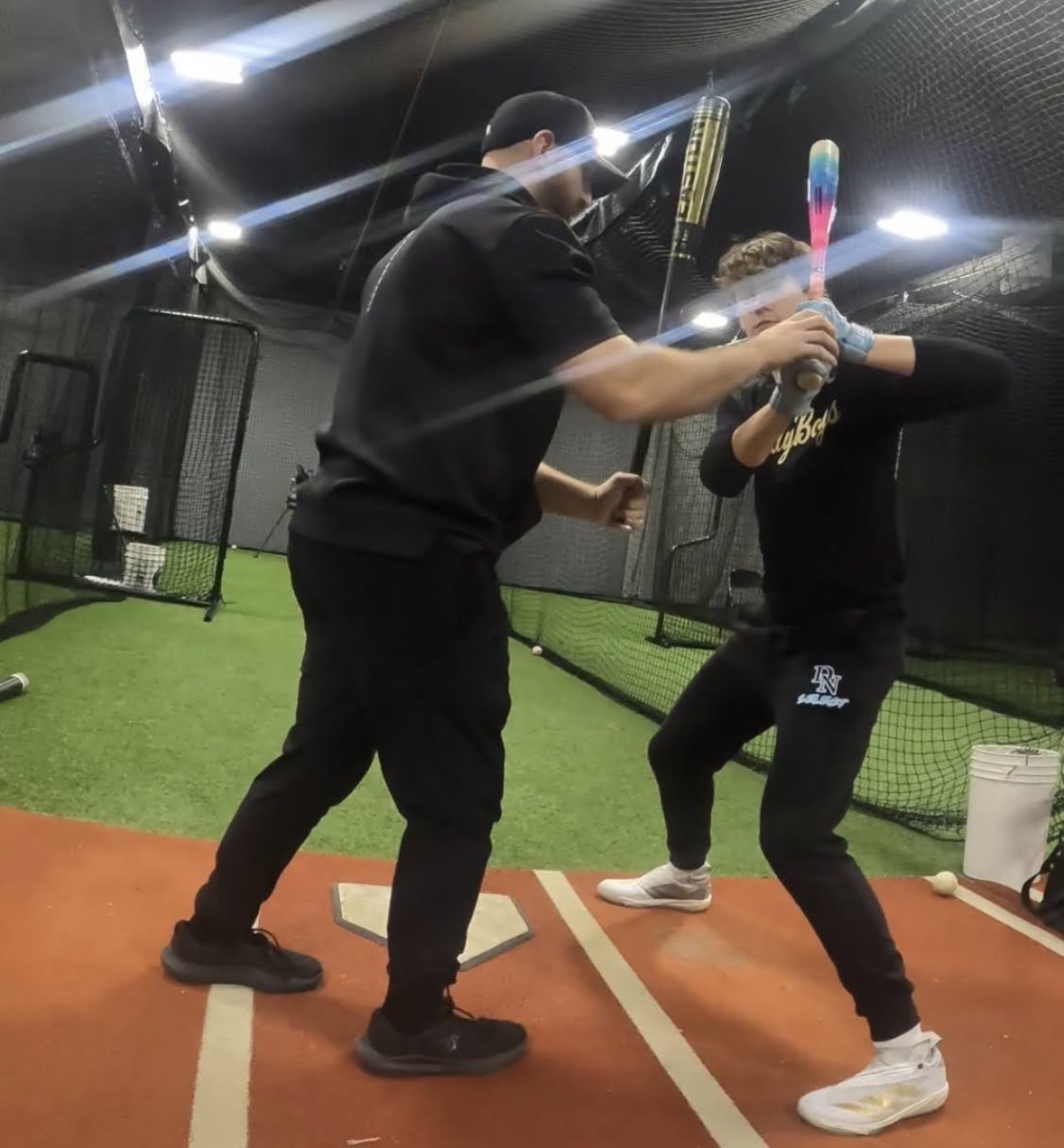
Nobody Becomes an Elite Hitter on Day One
Nobody becomes an elite hitter on day one. Long Island hitting coach Steve Goldstein on how youth hitters ages 8-18 develop, one rep at a time.
In this article6 sections · tap to jump
By Coach Steve Goldstein · D1 All-American · 2012 College World Series · 10+ Years Coaching Hitters
If you're a Long Island baseball parent wondering how long it takes your kid to become a better hitter, start in the weight room.
The first time you try to bench 135 pounds, you might not even move the bar. You get under it, push with everything you have, and nothing happens. But you keep coming back. Eventually it moves half an inch. Then a little more. Then one day you get one full rep. Before you know it, you're doing 10, 15, even 20.
Every rep matters. Every attempt teaches your brain and body to become more comfortable, more confident, and more capable of doing something you couldn't do before.
Nobody benches 135 on day one, and nobody becomes an elite hitter on day one. Youth hitters develop the same way strength does: one purposeful rep at a time. Here's what that process looks like for the hitters I train in Westbury and surrounding areas.
How Youth Hitters Actually Develop
Most families want to see the full rep right away. A 12-year-old who's been rolling over everything doesn't start driving balls into the gap after two lessons. The first wins are smaller than that:
- He lays off a curveball in the dirt with two strikes instead of chasing it.
- He fouls off a tough pitch he would have swung through a month ago.
- He barrels a ball the other way.
- His bat speed climbs a couple mph, or his attack angle moves into a better range.
None of that makes a highlight reel. All of it is the bar moving.
That's why I measure development instead of guessing at it. I use Blast Motion for swing metrics, OnForm for video breakdowns, and Quality At-Bat percentage (QAB%) from real games. QAB% is the number I care about most, because it tells me whether the work is showing up when it counts.
Elite hitters aren't built in one jump. They're built by stacking half inches.
Why Cage Reps Don't Always Show Up in Games
Nobody gets stronger doing 20 sloppy reps with bad form. You just get better at doing it wrong.
Hitting works the same way. Long Island is full of cage MVPs: kids who crush 5-foot front toss and fall apart against a real pitcher. Those reps feel great, but they don't transfer. My whole program is built around turning cage hitters into game hitters.
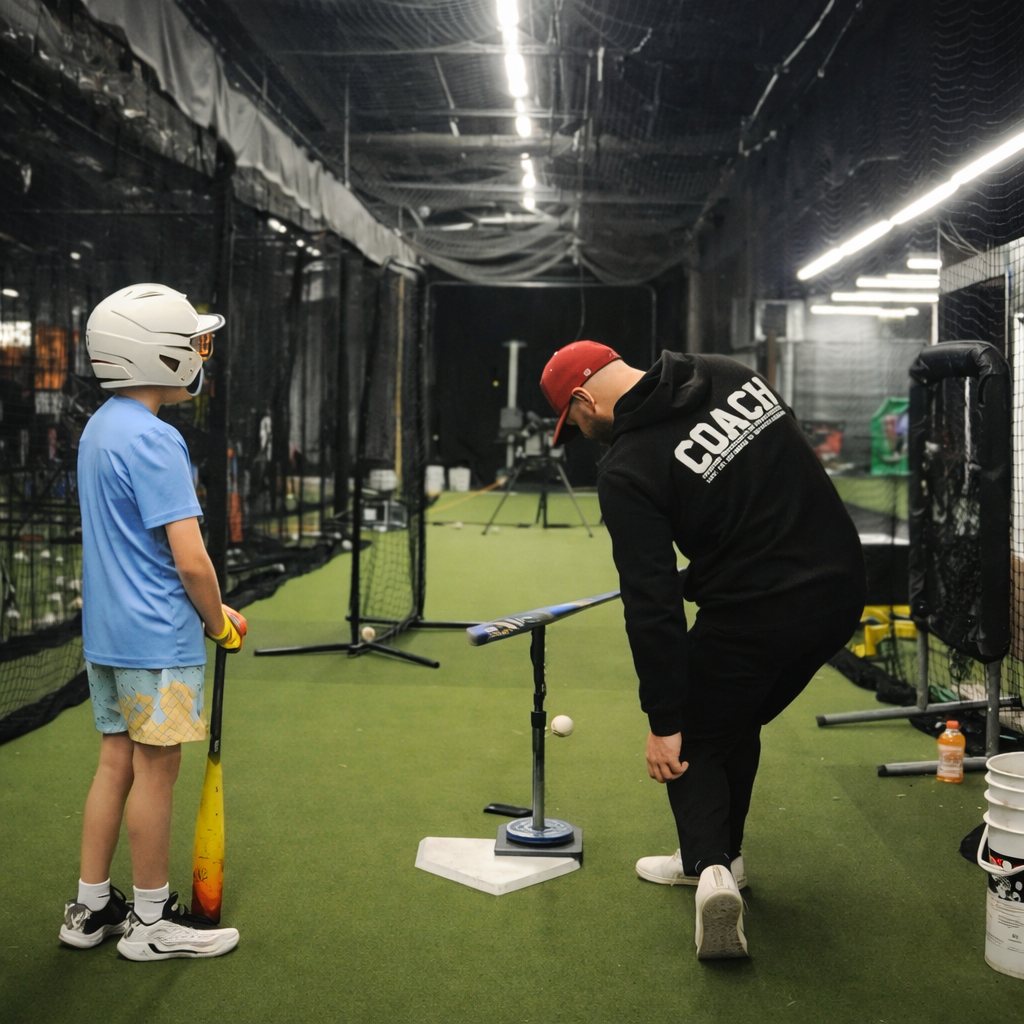
In the weight room, you don't stay at the same weight forever. You add a little when you've earned it. A hitter I train might start on the tee working on one movement, then move to front toss, then the machine, then mixed speeds and locations where he has to recognize the pitch and make a decision. Every step adds weight to the bar.
That last step matters as much as the swing. I coach by the 50/50 Rule: mechanics and Baseball IQ in equal measure. A beautiful swing means nothing if a hitter can't recognize the pitch, make the right decision, and put the barrel on the ball.
Every rep has a reason. The hitter knows what he's working on, why, and how it shows up in a game. That's the difference between taking reps and actually developing.
Slumps Are Part of Hitting Development
Anyone who lifts knows the feeling. Some days 135 feels like 185. You didn't lose your strength. You had a heavy day.
Hitting is one of the hardest skills in sports, and it doesn't develop in a straight line. A hitter can look great for three weeks and then go 0-for-the-weekend in a travel tournament. One strikeout doesn't mean the swing is broken. One bad weekend doesn't erase three months of work.
I learned this the hard way. I played Division I baseball at Stony Brook and Kansas and hit in the 2012 College World Series. I had talent, but nobody ever taught me how to adjust. When I struggled, I didn't know why. I chased perfection, changed too much, and ended up fighting my own thoughts instead of the pitcher.
That's a big part of why I coach the way I do. I want my hitters to understand their swing and their approach well enough that a heavy day is just a heavy day. They make the adjustment and get back under the bar.
What Good Hitting Lessons Look Like: Coach, Player and Parent
A good coach in the weight room doesn't lift the bar for you. He sets the right weight, checks your form, and keeps track of whether you're getting stronger.
The coach's job. I figure out what's holding a hitter back, build the plan to fix it, and track whether it's showing up in games, not just in the cage.
The player's job. Keep showing up and put real effort into every rep. I can't lift it for anyone.
The parent's job. Judge the trend, not one at-bat. Look for the half inch.
The payoff goes beyond baseball. Confidence doesn't come from someone telling a kid he's good. It comes from doing something he couldn't do before. A player who goes from not moving the bar to 20 reps learns that hard things get easier when you keep showing up, and he keeps that lesson for life.
Frequently Asked Questions
How long until my kid sees results from hitting lessons? It depends on where the hitter starts and how consistently he trains. The first changes show up as small wins, like better two-strike at-bats, cleaner contact and a bump in bat speed, before they show up in the box score.
What ages do you work with? I train Long Island's youth athletes ages 8-18.
How do you measure a hitter's progress? I use Blast Motion and HitTrax for swing and contact data, OnForm for video breakdowns, and Quality At-Bat percentage (QAB%) from GameChanger to see whether the work is transferring to games.
Where do you train, and which towns do you serve? I train hitters in Westbury and surrounding areas, including Garden City, Mineola, Franklin Square, Oceanside, Rockville Centre, Bethpage, West Hempstead and Wantagh.
How do we get started? Send a message through the contact page. We'll talk by phone first, and if it's a fit, we'll set up an initial assessment.
Start With an Assessment
Nobody becomes an elite hitter on day one. The ones who get there are the ones who kept getting back under the bar.
If your hitter is ready to put in that kind of work, the first step is an assessment. We'll find out where the bar is right now and what it's going to take to move it.
Coach Steve | Long Island Hitting Coach. Turning Long Island Cage Hitters into Game Hitters.
THE NEXT STEP
WANT THIS DIAGNOSED ON YOUR HITTER?
Your hitter probably doesn’t need more random swings. They need to know what they’re actually trying to fix.
Start with an Initial Hitting Assessment — video analysis, swing and mechanics evaluation, approach and hitting-IQ review, and a clear development plan.