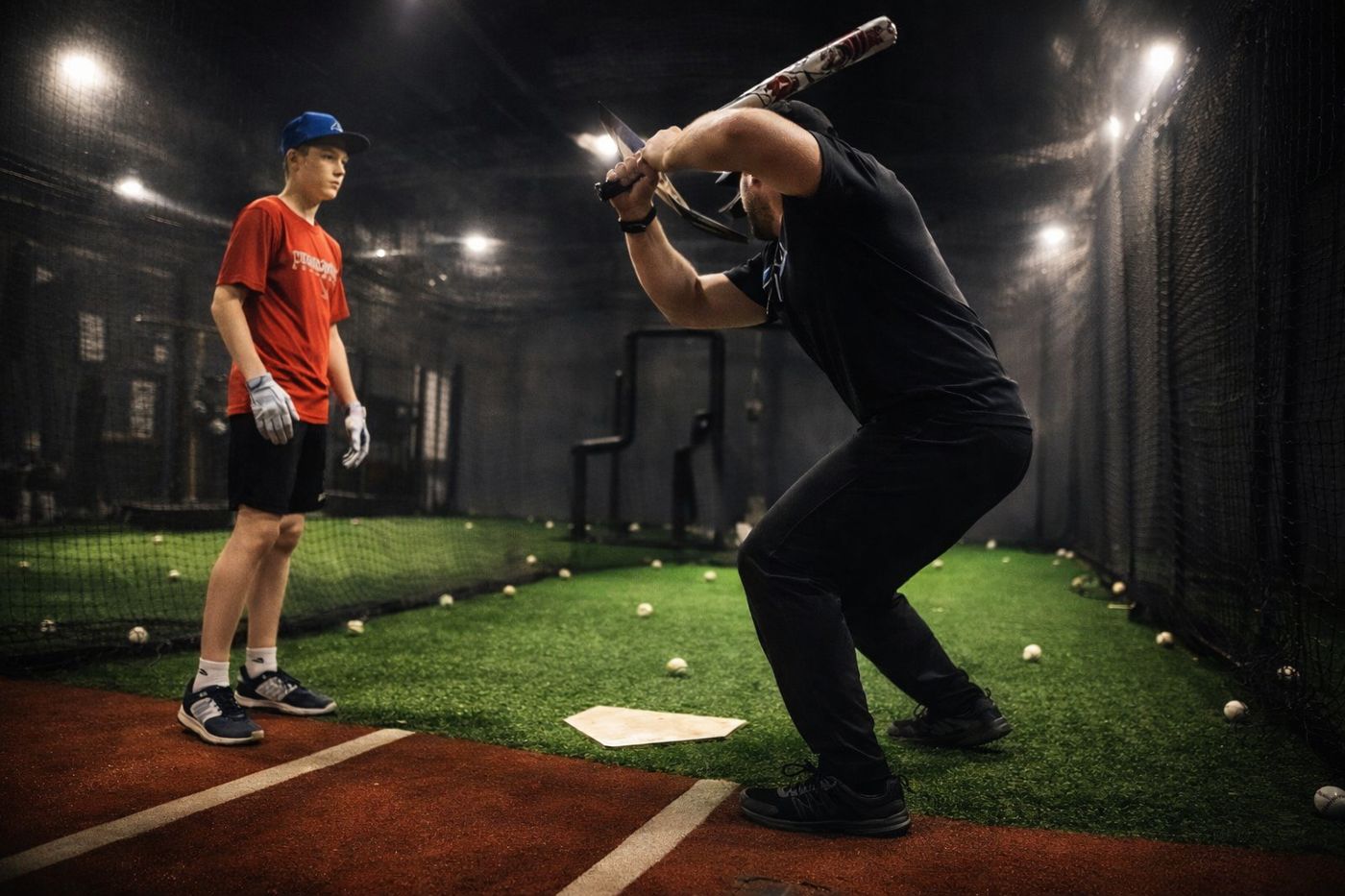
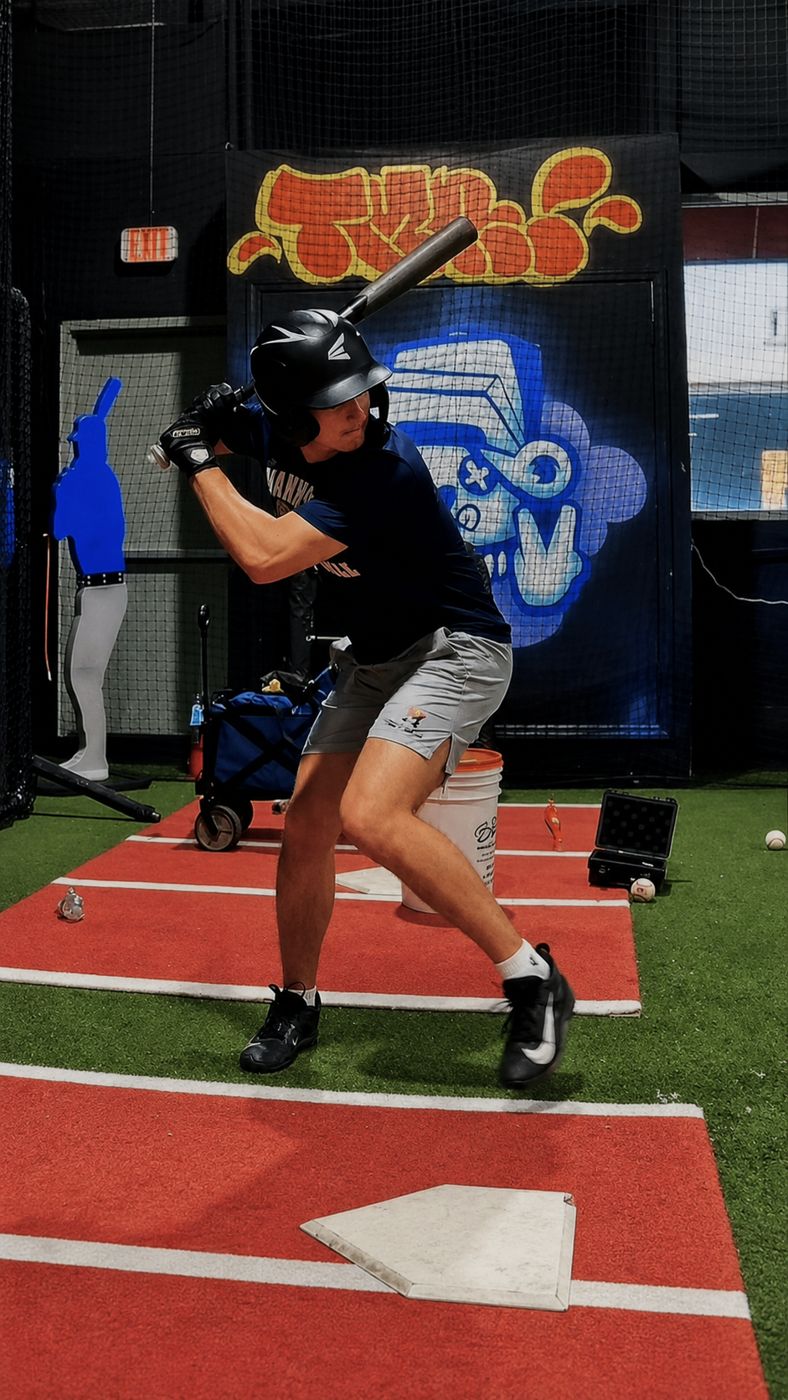
Baseball Swing Mechanics: What the Hands, Hips, Knees and Weight Actually Do
Every part of the swing has a job. Here's how I break down the hands, hips, knees, weight transfer and bat angle, and what goes wrong when one of them doesn't do its part.
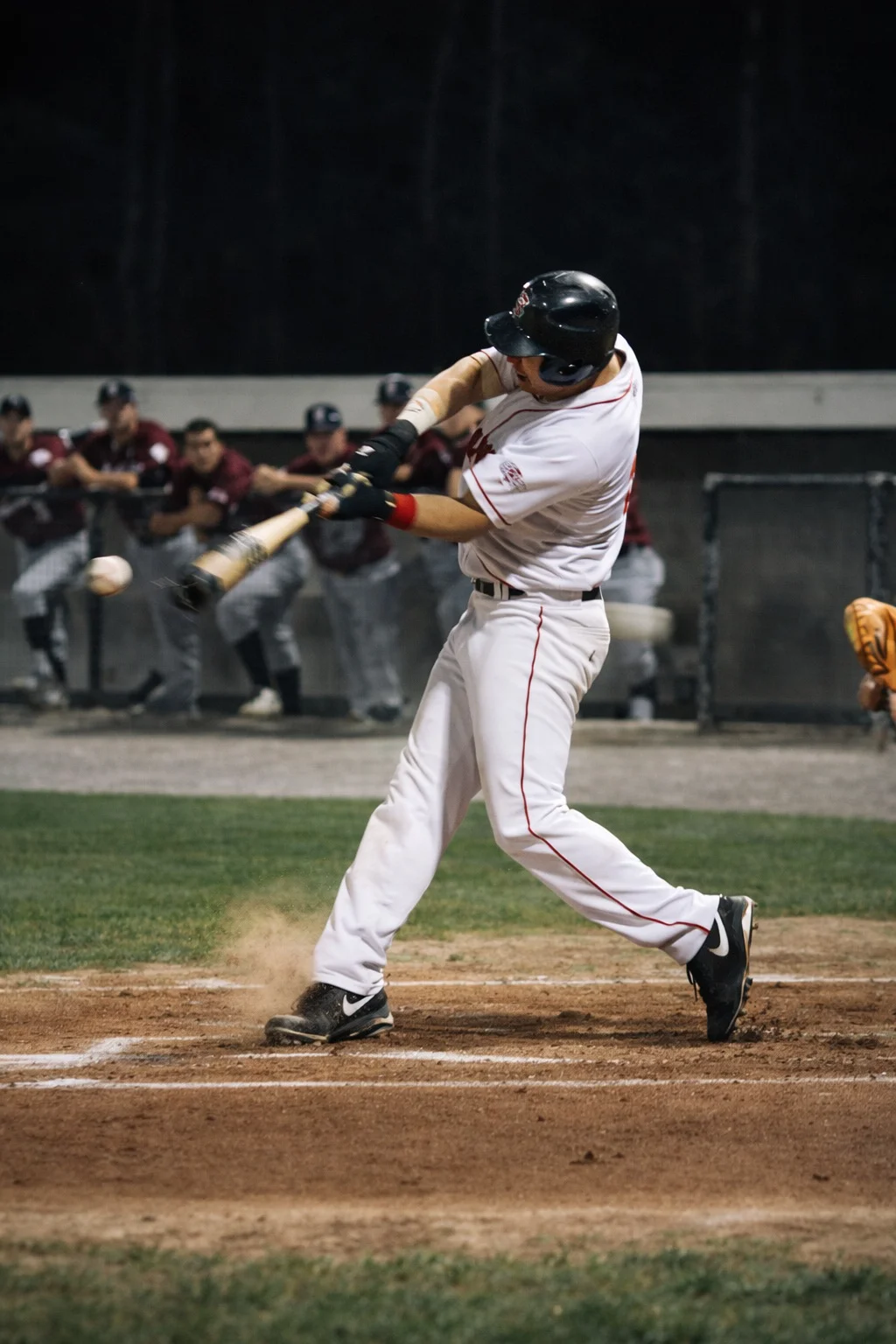
In this article6 sections · tap to jump
Hitting a baseball is one of the hardest things to do in sports, and the swing that does it uses the whole body in a specific order.
When a swing breaks down, it's rarely the whole swing. It's one part not doing its job, and everything after it paying for it.
So this is how I break the swing down: five parts, what each one is supposed to do, and what it looks like when it doesn't.
1. The Hands
Most young hitters squeeze the bat with both hands and try to muscle it through the zone. The hands have two different jobs.
The bottom hand sets the path. It pulls the bat through the zone on the right plane and keeps the barrel there as long as possible. It's also the connection between the body and the bat. When the bottom hand is firm without being tight, the power from the legs and core has somewhere to go.
The top hand delivers the barrel. It controls the bat head, creates the whip late in the swing, and drives through the ball into extension. That's where the swing finishes.
Some coaches teach lining up the knocking knuckles. What matters more is a grip that's comfortable and lets the hitter control the barrel and whip it. Stay loose early. The grip tightens on its own as the bat gets to contact.
The bottom hand sets the path. The top hand accelerates the barrel through it. They have to work together.
2. The Hips
The hips are the engine.
They create the rotation that travels up the body and ends in the barrel.
The load. Before anything goes forward, the hitter gathers into the back hip. **Think of stretching a rubber band before you let it go.
**The front hip turns in slightly and the back hip stores the energy. I covered this move in detail in The Different Ways to Load in a Baseball Swing.
Separation. As the front foot lands, the hips start turning toward the pitcher while the shoulders stay closed.
| That stretch between the lower half and the upper half is where rotational power comes from. The front hip clears and makes room for the hands and the bat. The back hip drives forward and through.
3. The Knees
The knees get overlooked, and they shouldn't.
The back knee drives in and forward as the swing starts. It isn't just following along.
That drive does four things:
- It starts the hip turn.
- It pushes against the ground, and the ground pushes back. That force goes up through the legs, hips and torso.
- It keeps the hitter balanced, so he doesn't spin out or lose posture.
- Done right, it holds the hips closed a beat longer, which means more separation to release.
The front knee has the opposite job. As the front foot lands, the front leg braces. It becomes a firm post the body rotates against. If that leg is soft, the energy from the lower half leaks out before it reaches the bat.
4. Weight Transfer
Power comes from moving the body from the back side to the front side, under control. It happens in three parts:
- Load: gather into the back hip. You're collecting energy, not just leaning back.
- Stride: a controlled move toward the pitcher that builds momentum and keeps the upper and lower half separated.
- Transfer: as the hips turn and the barrel accelerates, the weight drives off the back leg and into a braced front leg.
All of it depends on the ground. The hitter pushes into the ground with the back leg and braces against it with the front, and that force travels up into the bat. A hitter who doesn't transfer his weight is swinging with his upper body only, and there's a ceiling on that.
The two mistakes are opposites. One is hanging back on the back leg, so the weight never gets through the ball. The other is lunging forward early, which costs balance and power.
5. Bat Angle
Bat angle decides the quality of contact and where the ball goes.
Attack angle is the direction the barrel is traveling at contact: up, level or down. Pitches come in on a slight downward plane, so a barrel moving slightly up matches that plane. The barrel and the ball are on the same line longer, which gives the hitter more room to square it up. Too steep and you get pop-ups. Swing down and you get ground balls.
Vertical bat angle is how the barrel is tilted at contact. It tells you how the hitter is controlling the bat head through the zone.
Three things shape both:
- Posture and shoulder tilt
- A compact hand path
- Hip rotation that brings the bat through on plane
This is where Blast Motion and video earn their place. I can measure attack angle instead of guessing at it.
Putting It Together
None of these five works alone.
The hands can't deliver a barrel the hips didn't bring. The hips can't turn against a front leg that isn't braced. The weight can't transfer if the load never gathered it.
There isn't one swing every hitter has to copy.
There are principles, and a swing built on them holds up when the game speeds up.
If you want the full sequence in order, read The 7 Critical Swing Checkpoints.
THE NEXT STEP
WANT THIS DIAGNOSED ON YOUR HITTER?
Your hitter probably doesn’t need more random swings. They need to know what they’re actually trying to fix.
Start with an Initial Hitting Assessment — video analysis, swing and mechanics evaluation, approach and hitting-IQ review, and a clear development plan.